

Apply Now
MENU

Lusail University Press

Logo

Dear Scholars and Readers,


I am delighted to welcome you to the Lusail University Press’s (LU Press’s) website.
At LU Press, we are committed to the pursuit of knowledge and the dissemination of groundbreaking research. Our mission is to support and promote the diverse and innovative scholarly work of our faculty and authors. We take immense pride in being a platform for intellectual exploration, fostering academic discussions, and advancing understanding in a wide range of fields.
Our publications span various disciplines, from the arts and humanities to the sciences and social sciences. We are particularly distinguished for our commitment to filling educational gaps in Qatar and the region, with a special focus on textbooks in the Arabic language. We recognize the importance of providing high-quality, accessible educational materials in Arabic to meet the needs of our community.
In addition, we are dedicated to aligning our research and publishing efforts with the research priorities of the State of Qatar. We understand the critical role that research plays in advancing the goals and aspirations of our nation.
Furthermore, our commitment to academic excellence is reflected in our rigorous peer review process. Our books and journals go through a thorough and meticulous peer review, ensuring that the knowledge we disseminate meets the highest standards of academic integrity.
This website serves as a gateway to publications of books and journals. Whether you are a researcher seeking the latest publications in your area of study, a student looking for resources to support your learning, or a reader interested in exploring the world of academia, you will find valuable content and resources here.
Thank you for visiting the LU Press’s website. Feel free to reach out to us with your inquiries. We look forward to fostering collaboration, sharing knowledge, and contributing to academic conversation.

Dr. Murielle El Hajj Nahas
Director of Lusail University Press

Lusail University Press (LU Press) aims to promote research in Qatar and the region through academic publications aligned with the international publishing standards.
The Press publishes peer-reviewed textbooks to be used in the relevant courses offered by Lusail University, and to meet the local and regional need for textbooks that are aligned with the Qatari and Arabic values and culture.

To become a leading publisher recognized for quality peer review and high academic publishing standards in Qatar, the region, and the world.

Lusail University Press (LU Press) publishes peer-reviewed books and journals that connect authors and readers across various spheres of knowledge to advance and enrich the global conversation. We embrace the highest standards of scholarship and diversity in our publishing. In keeping with Lusail University’s commitment to provide a stimulating environment that promotes research and knowledge dissemination, we publish for scholars and students everywhere.
  • Make available to the broader public the full range and value of research generated by university faculty and by scholars from the wider community.
  • Draw attention to the distinctiveness of Qatari and Arabic culture through publication of works on the State of Qatar and the region.
  • Publish books and journals in formats from print to e-book to audio to open access and make publications available in accessible alternative formats for those with print-related disabilities.
  • Promote the translation of works of scholarship and literary importance by English-speaking authors into other languages, making their scholarship available to researchers, students, and readers worldwide.
  • Add value to scholarly work through careful editorial development; professional copyediting and design; extensive promotion and discoverability efforts; and global distribution networks.
  • Publish start-up and established scholarly journals in the humanities, social sciences, and STEM disciplines that contribute to a thriving ecosystem of article-based scholarship.
  • Provide distribution and other publishing services to Lusail University’s colleges, departments, and units, and act as a distributor for independent publishers, ranging from established presses to innovative scholar-led initiatives.
  • Engage in Lusail University’s teaching and learning process by providing substantive work study, internship, and apprenticeship experiences for undergraduate and graduate students.

Latest Releases


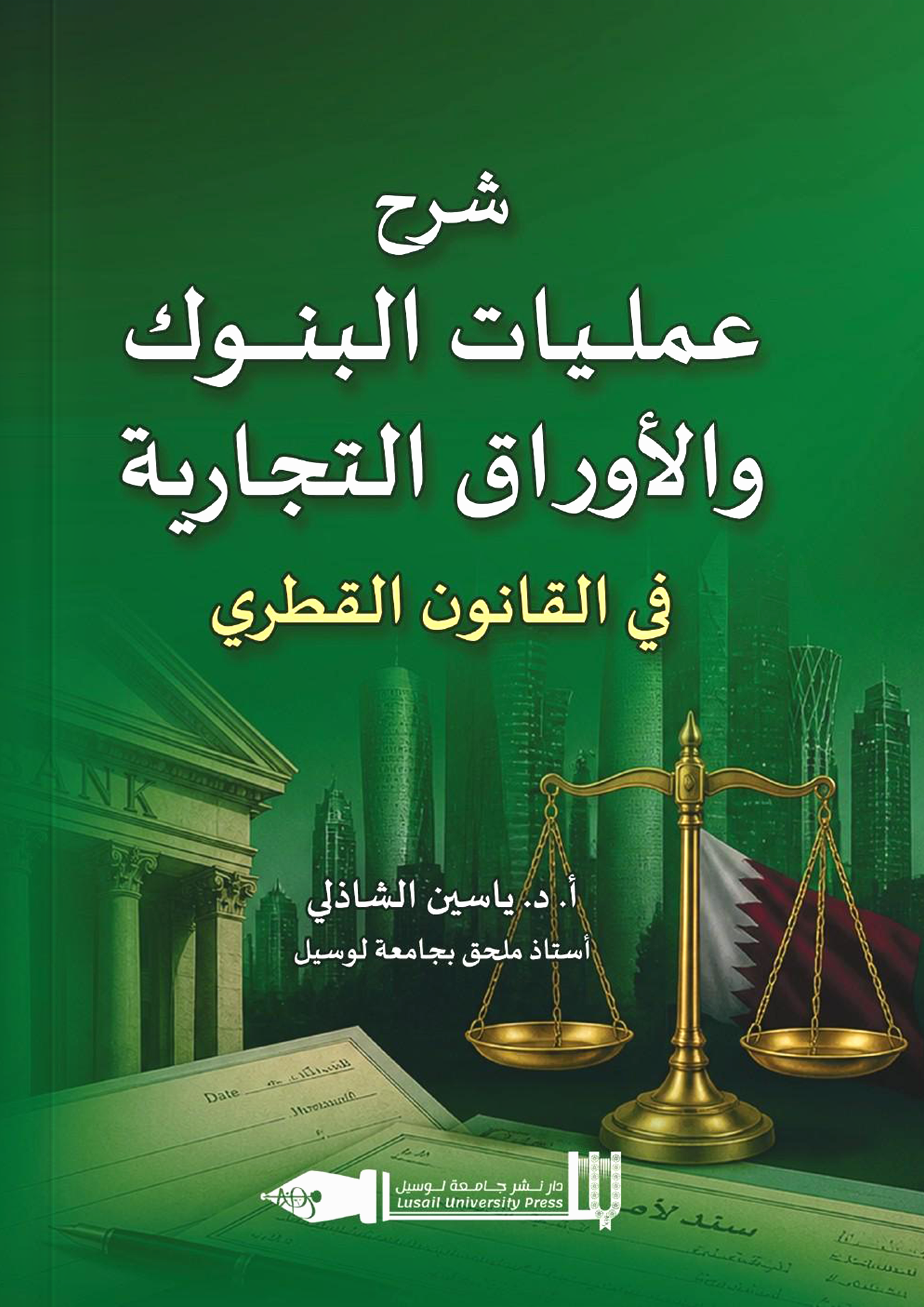
Human Rights
Explanation of Banking Operations and Commercial Papers in Qatari Law Professor Yassin Elshazly
More
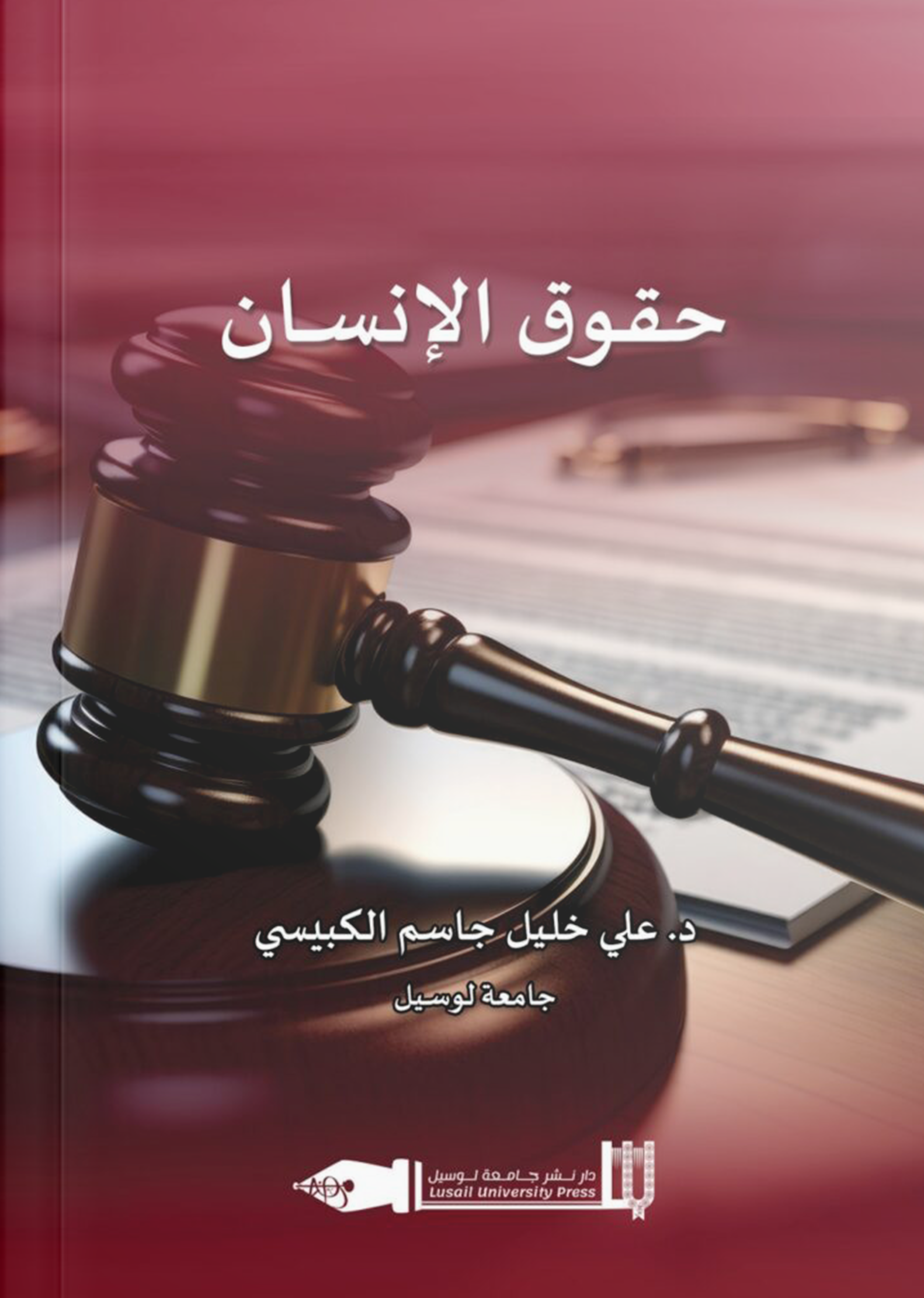
Human Rights
Human Rights Dr. Ali Khalil Jassim Al-Kubaisi
More
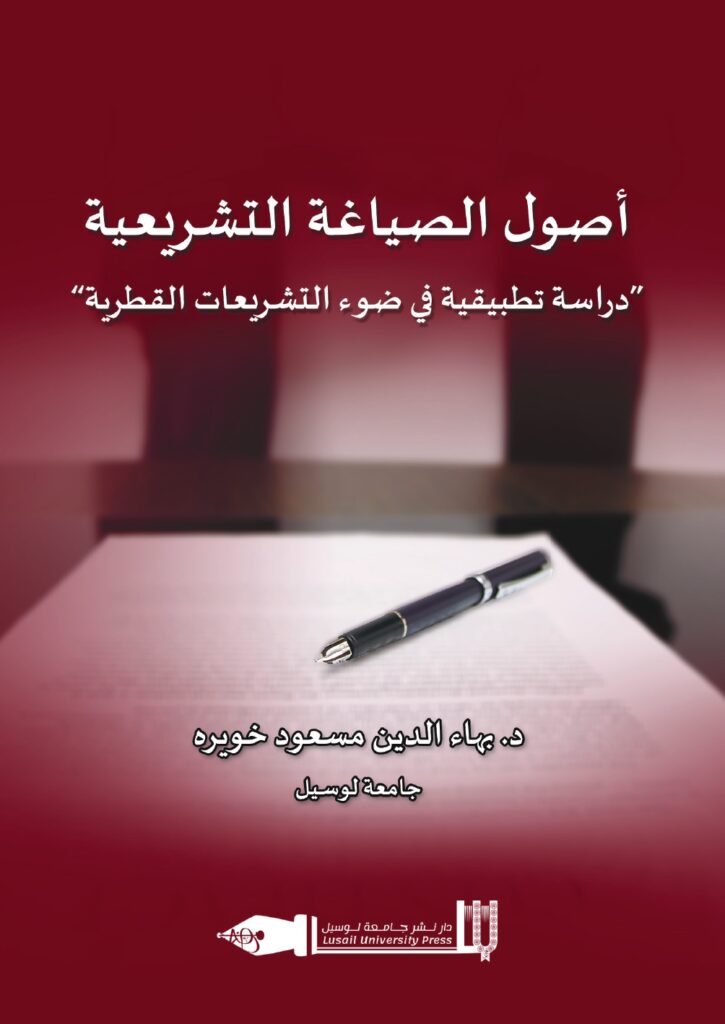
Principles of Legislative Drafting
Principles of Legislative Drafting Dr. Bahaa El-Din Masoud Khwayrah
More
For more publications from Lusail University Press

Latest Releases

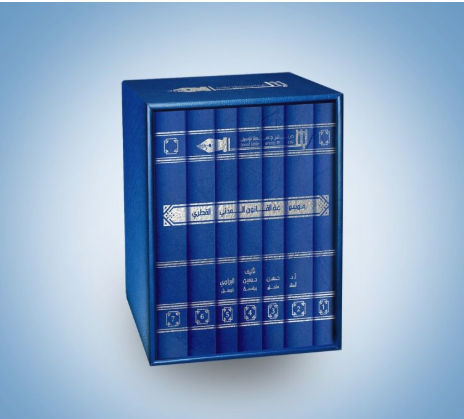
Encyclopedia of Qatari Civil Law

More
For more publications from Lusail University Press

مقترح الكتاب الجماعي بعنوان

"شارل ديغول بعيون عربية"

المقدمة

يُعدّ شارل ديغول من أبرز الشخصيات السياسية في التاريخ المعاصر، لما اضطلع به من دور ريادي خلال الحرب العالمية الثانية وما بعدها، ولإسهاماته في إعادة بناء الدولة الفرنسية وترسيخ مفاهيم السيادة والاستقلال.

وانطلاقًا من هذه الأهمية، تسعى دار نشر جامعة لوسيل إلى إصدار كتاب جماعي محكّم بعنوان "شارل ديغول بعيون عربية"، يهدف إلى تقديم قراءة عربية متعددة التخصصات لسيرة ديغول وفكره السياسي، واستكشاف أبعاد علاقاته بالعالم العربي، بما يسهم في تعزيز الحوار الثقافي والعلمي بين الفضاءين العربي والفرنسي.

محاور الكتاب

  • • شارل ديغول: سيرته ومسيرته العسكرية
  • • شارل ديغول في الحرب العالمية الأولى وتأثيراتها الثقافية
  • • سياسة المقاومة الفرنسية (شارل ديغول نموذجًا)
  • • مكانة شارل ديغول في الثقافة الفرنسية والعربية
  • • دور شارل ديغول في إعادة بناء الدولة الفرنسية بعد الحرب العالمية الثانية
  • • الديمقراطية والتعددية في فكر شارل ديغول السياسي
  • • إسهامات شارل ديغول في استقلال الدول العربية والأفريقية
  • • موقف شارل ديغول من الحرب الجزائرية
  • • زيارات شارل ديغول للعالم العربي وأبعادها السياسية والثقافية

إرشادات تقديم الملخصات

  • • عدد الكلمات: 500 كلمة (باللغة العربية)
  • • يتضمن الملخص:
    • - عنوان الفصل
    • - إشكالية البحث
    • - أهداف الدراسة
    • - المنهجية
    • - أهم النتائج المتوقعة
  • • يُرفق مع الملخص:
    • - الاسم الكامل
    • - الانتماء المؤسسي
  • • يرجى تقديم الملخصات عبر البريد الإلكتروني: lupress@lu.edu.qa

إرشادات إعداد الفصول العلمية

1. هيكلة الفصل

يجب أن يتضمّن الفصل العناصر التالية:

  1. عنوان الفصل (باللغة العربية والإنجليزية)
  2. اسم الباحث/الباحثين + الانتماء المؤسسي (باللغة العربية والإنجليزية)
  3. ملخص (250 كلمة) (باللغة العربية والإنجليزية)
  4. كلمات مفتاحية (4-6 كلمات) (باللغة العربية والإنجليزية)
  5. مقدمة
  6. إشكالية البحث وأهدافه
  7. الإطار النظري والدراسات السابقة
  8. المنهجية
  9. التحليل والمناقشة
  10. النتائج
  11. الخاتمة
  12. قائمة المراجع
2. حجم الفصل

• من 6000 إلى 8000 كلمة، دون احتساب الملخص وقائمة المراجع.

3. التنسيق الفني
  • • الخط: العربية: Times New Roman | الأجنبية: Times New Roman
  • • حجم الخط: العنوان: 16 غامق | العناوين الفرعية: 14 غامق | المتن: 12
  • • تباعد الأسطر: 1.5
  • • الهوامش: 2.5 سم
  • • محاذاة النص: Justified (ضبط كامل)
4. أسلوب التوثيق

• يُعتمد أسلوب: Chicago Style (Notes & Bibliography):
https://www.chicagomanualofstyle.org/tools_citationguide/citation-guide-1.html

* يُسمح بالتعليق التفصيلي في الهوامش والإحالات الدقيقة للأرشيف والخطابات السياسية.

5. المراجع
  • • يُعتمد أسلوب: Chicago Style (Notes & Bibliography): رابط الدليل العلمي
  • • لا يقل عدد المراجع عن 15 مرجعًا علميًا.
  • • الالتزام بالتنوع في المصادر والمراجع، بحيث تشمل مصادر عربية وأجنبية، مع الإبقاء على المراجع الأجنبية بلغتها الأصلية، وعدم ترجمتها إلا في حال وجود ترجمة منشورة ومعتمدة.

إرشادات الجداول والصور

أولاً: الجداول
  • • ترقيم متسلسل: (الجدول 1، الجدول 2...)
  • • عنوان الجدول: أعلى الجدول
  • • المصدر: أسفل الجدول
  • • يجب أن تكون الجداول واضحة وقابلة للتحرير (غير صور)
ثانياً: الصور والأشكال
  • • ترقيم متسلسل: (الشكل 1، الشكل 2...)
  • • عنوان الشكل: أسفل الصورة
  • • الجودة: 300 DPI على الأقل
  • • الصيغ المقبولة: JPEG / PNG
  • • ضرورة ذكر المصدر والالتزام بحقوق النشر
ثالثاً: إدراجها في النص
  • • الإشارة داخل النص (مثال: كما يبيّن الشكل 1).
  • • عدم إدراجها دون تحليل أو تفسير.
  • • إدراجها في مكانها المناسب داخل الفصل.

معايير الالتزام بحقوق الملكية الفكرية

يُشترط في الفصل المُقدَّم للنشر ضمن هذا الكتاب أن يستوفي المعايير والإرشادات الواردة أدناه:

  • 1. إنّ محتوى الفصل أصيل، ولم يتم نشره مسبقاً مع أي دار نشر أخرى، كما لم يتم تقديمه للنشر لدى أي دار نشر أخرى.
  • 2. تم ذكر وإقرار جميع المؤلفين المشاركين في تأليف الفصل.
  • 3. إنّ الفصل لا يحتوي على أجزاء أو فقرات أو أفكار مقتبسة من مصادر أو مراجع ورقية أو إلكترونية، سواء كانت للمؤلف/المؤلفين أنفسهم أو لمؤلفين آخرين، دون الإشارة الواضحة لتلك المصادر والمراجع. تم توثيق جميع الاقتباسات بشكل يتوافق مع قوانين حقوق الملكية الفكرية.
  • 4. إنّ الفصل لا يحتوي على أجزاء أو فقرات مستلة من كتب أو مقالات علمية أو منشورات أخرى، ورقية أو إلكترونية، سبق نشرها سواء من المؤلف/المؤلفين أنفسهم أو من مؤلفين آخرين.
  • 5. إذا تضمنت أجزاء الفصل ترجمات من مصادر أو مراجع ورقية أو إلكترونية، فإنّ تلك الأجزاء لا تتجاوز 200 كلمة لكل مصدر أو مرجع. وفي حال تم تجاوز هذا حد من الكلمات، فإنّ المؤلف/المؤلفين قد حصل/حصلوا على حقوق الترجمة من مالكي الحقوق الأصليين، وتم إخطار دار نشر جامعة لوسيل بالحصول على هذه الحقوق، بالإضافة إلى تقديم الموافقة الرسمية الخطية للحصول على هذه الحقوق للدار.
  • 6. تم توثيق جميع الأجزاء المترجمة التي لا تتجاوز 200 كلمة، مع الإشارة الواضحة إلى المصادر والمراجع الأصلية، بما يتوافق مع حقوق الملكية الفكرية.
  • 7. في حال تمّت ترجمة أجزاء من مصادر أو مراجع ورقية أو إلكترونية من قبل المؤلف/المؤلفين، تم توضيح أنّ هذه الأجزاء هي من ترجمة المؤلف/المؤلفين، مع الإشارة إلى المصادر والمراجع الأصلية، بما يتوافق مع حقوق الملكية الفكرية.

شروط خاصة باستخدام الذكاء الاصطناعي

  1. يجب الإفصاح عن أي استخدام للذكاء الاصطناعي عند تقديم الفصل.
  2. يُمنع إدراج محتويات أو بيانات أو مراجع أو نتائج ملفّقة أو غير محققة.
الإفصاح عند التقديم:
  • • 1. يجب على الباحث أن يصرّح في رسالة البريد الإلكتروني المرفقة بالفصل بما يلي:
    - اسم برنامج الذكاء الاصطناعي الذي تم استخدامه.
    - ماهية الاستخدام (تدقيق لغوي، ترجمة أولية، صياغة مسودة…).
  • • 2. مثال لصياغة التصريح:
    "أُقرّ/نقرّ بأنّ محتوى الفصل أُنجز بمساهمة فكرية كاملة مني/منا، مع الاستعانة ببرنامج [اسم البرنامج] في حدود [توضيح الاستخدام: تدقيق لغوي/ترجمة أولية/صياغة مسودات...]، مع المراجعة الكاملة من الباحث/الباحثين"
  • • 3. يظهر هذا التصريح ضمن بيان يتم إضافته إلى النسخة النهائية المنشورة من الفصل، وذلك دعماً لمبادئ الشفافية، وضماناً للالتزام بشروط الاستخدام الخاصة بتقنيات وبرامج الذكاء الاصطناعي. ويقتصر هذا الشرط على إنتاج المحتوى الجديد فقط، ولا يجوز استخدام هذه التقنيات في المواد المنشورة سابقاً.
  • • 4. يُرفض أي عمل يثبت لاحقاً أنّ فيه استخداماً لتقنيات وبرامج الذكاء الاصطناعي غير مصرّح به.
  • • 5. الاستخدام المسموح للذكاء الاصطناعي في الفصول: التدقيق اللغوي، إعادة الصياغة، الترجمة الأولية، دعم التحليل النصي مع مراجعة الباحث.
  • • 6. الاستخدام غير المسموح للذكاء الاصطناعي في الفصول: إنتاج نتائج أو مراجع غير دقيقة، اعتبار البرنامج مؤلفاً مشاركاً، الاعتماد الكلي على النصوص المنتجة من برنامج الذكاء الاصطناعي.
  • • 7. الإجراءات عند المخالفة: (أ) رفض النشر مباشرة. (ب) سحب العمل المنشور إذا اكتُشفت المخالفة لاحقاً. (ج) إخطار المؤسسة الأكاديمية التابعة للباحث. (د) الحرمان المؤقت من النشر في دار نشر جامعة لوسيل.

معايير التحكيم العلمي

تخضع الفصول إلى تحكيم علمي مزدوج سري (Double-Blind Review)، وفق المعايير التالية:

الأصالة العلمية جدة الموضوع قوة التحليل وضوح المنهجية ارتباط البحث بمحاور الكتاب سلامة اللغة الالتزام بالإرشادات

الجدول الزمني

التاريخ المرحلة
31 أغسطس 2026 آخر موعد لتقديم الملخصات (500 كلمة) والكلمات المفتاحية
30 سبتمبر 2026 إشعار قبول/رفض الملخصات
30 نوفمبر 2026 تقديم الفصول الكاملة
31 ديسمبر 2026 نتائج التحكيم الأولي
15 يناير 2027 التعديلات النهائية
31 يناير 2027 إشعار القبول النهائي
أبريل 2027 النشر النهائي

الفئة المستهدفة

  • • الباحثون في العلوم السياسية
  • • الأكاديميون في الدراسات التاريخية
  • • المهتمون بالعلاقات العربية الفرنسية
  • • طلاب الدراسات العليا بإشراف أكاديمي من أعضاء هيئة التدريس

Journal Overview

The Rule of Law and Anti-Corruption Center Journal (ROLACC Journal), a journal of Lusail University College of Law, is an internationally peer-reviewed and open access law journal published in both Arabic and English by Lusail University Press (LU Press).

ISSN: 2617-2755
e-ISSN: 2617-2763

The Rule of Law and Anti-Corruption Center Journal publishes articles that cover all areas related to the fields of anti-corruption and the Rule of Law, including but not limited to:
• studies of civil society engagement
• resources management
• issues related to the justice sector
• legal system comparisons
• interdisciplinary approaches that combine law and other sciences
• legal violations in various fields, such as sports law, finance law, insurance law, health law, infrastructure, procurement, and cross-border issues

The Rule of Law and Anti-Corruption Center Journal publishes two regular issues in July and December every year.

Editor-in-Chief: H.E. Dr. Ali Bin Fetais Al-Marri, Chairman of the Board of Trustees of Lusail University and Chairman of the Board of Trustees of The Rule of Law and Anti-Corruption Centre, UN special advocate for anti-corruption, Qatar

Associate Editor-in-Chief: Professor François Amale, Sorbonne Law School, Attorney at Law, France

Managing Editor: Dr. Bahaaeddin M.S. Khwaira, Associate Professor, College of Law, Lusail University, Qatar

Board Members:
• Hon. Judge Michael Mukasey, Former Judge and Former U.S. Attorney General

• H.E. Mr. Sidiki Kaba, The Keeper of the seals and the Minister of Justice, Senegal

• Sir William Blair, Professor, Centre for Commercial Law Studies, UK

• Prof. Salah Zaineddin, Professor of Private Law, College of Law, Lusail University, Qatar

• Dr. Mohdbara Abuanzeh, Associate Dean and Associate Professor of Criminal Law, College of Law, Lusail University, Qatar

• Dr. Ameed Khasawneh, Legal Advisor, Associate Professor of Public International Law, College of Law, Lusail University, Qatar

1. Indexing and Abstracting
  • • DOAJ – Directory of Open Access Journals
  • • ROAD – Directory of Open Access Scholarly Resources
2. Bibliographic Databases and Discovery Platforms
  • • Crossref
  • • OpenAlex
  • • SUDOC
  • • ZDB – Zeitschriftendatenbank
3. Digital Archiving and Preservation
  • • CLOCKSS Archive
  • • Portico
  • • The Keepers Registry

• Average duration from submission to first decision: One month
• Average duration from first decision to final decision after completion of peer review: Three months
• Acceptance rate (2023-2025): 45%

Research papers are not published in the Rule of Law and Anti-Corruption Center Journal until they have been accepted for publication by at least two specialized reviewers. The researcher’s name is kept confidential when submitting the research to the reviewers.

It is a requirement that any research submitted to the Rule of Law and Anti-Corruption Center Journal has not been previously published or accepted for publication by any other entity.

If it is revealed by LU Press that content published is plagiarized from other sources or authors or if there is prior publication or lack of integrity in publishing, LU Press has the right to retract the publication in accordance with the procedures of the Committee on Publication Ethics (COPE).

If the author is a faculty member at Lusail University, the faculty disciplinary policy applies to them.

Researchers seeking to publish their articles in the Rule of Law and Anti-Corruption Center Journal are required to fully comply with the standards adopted by the journal. These standards aim to ensure academic integrity, safeguard intellectual property rights, and promote transparency in the production of scholarly knowledge.

The standards include requirements concerning the originality of submitted work, proper documentation of sources and references, regulations governing translation and citation practices, as well as guidelines for the responsible use of artificial intelligence tools and technologies in academic research and writing.

Standards for Intellectual Property Compliance
1. The content of the article is original and has not been previously published with any other publisher, nor has it been submitted for publication to any other publisher.

2. All contributing authors have been mentioned and acknowledged.

3. The article does not contain parts, paragraphs, or ideas excerpted from printed or electronic sources and references, whether by the author/authors themselves or by other authors, without clear citation of those sources and references. All citations have been referenced appropriately in accordance with intellectual property rights laws.

4. The article does not contain parts or paragraphs extracted from previously published books, articles, or other printed or electronic publications, whether by the author/authors themselves or by other authors.

5. If parts of the article include translations from printed or electronic sources and references, those parts do not exceed 200 words per source or reference. If this word limit is exceeded, the author/authors have obtained translation rights from the original rights holders, and Lusail University Press has been notified of these rights, in addition to providing written official consent for obtaining these rights to the press.

6. All translated sections not exceeding 200 words have been referenced, with clear reference to the original sources and references, in accordance with intellectual property rights.

7. If parts of printed or electronic sources and references have been translated by the author/authors, it has been clarified that these parts are translated by the author/authors, with reference to the original sources and references, in accordance with intellectual property rights.

Standards for the Responsible Use of Artificial Intelligence
1. Disclosure of any use of AI is mandatory when submitting a research article.

2. The inclusion of fabricated or unverified content, data, references, or results is strictly prohibited.

Disclosure upon Submission

1. The researcher must declare in the email accompanying the research article the following:
• The name of the AI program used.
• The nature of its use (language proofreading, preliminary translation, draft writing, etc.).

2. Example of declaration wording:
“I hereby declare that the content of the research article has been accomplished through my/our full intellectual contribution, with the assistance of the [program name] program limited to [clarify the use: language proofreading/preliminary translation/draft writing…], with full review by the researcher(s).”

3. This declaration must appear in a statement added to the final published version of the research article, in support of the principles of transparency and in compliance with the terms of use of AI technologies and programs. This condition applies only to newly produced content and does not permit the use of such technologies for previously published materials.

4. Any work that is later proven to have used undeclared AI technologies or programs will be rejected.

5. Permitted uses of AI in research articles: language proofreading, rephrasing, preliminary translation, textual analysis support with researcher’s review.

6. Prohibited uses of AI in research articles: producing inaccurate results or references, listing the program as a co-author, fully relying on AI-generated texts.

7. Procedures in case of violation:
(a) Immediate rejection of publication.
(b) Withdrawal of the published work if the violation is discovered later.
(c) Notification of the researcher’s academic institution.
(d) Temporary suspension from publishing with Lusail University Press.

Guide for Authors Guide for Authors

Please send your article in Word Document format to the Managing Editor Dr. Bahaaeddin Khwaira at:
rolacjournal@lu.edu.qa

If you have any inquiries, please contact us by email at:

lupress@lu.edu.qa

Dear Scholars and Readers,


I am delighted to welcome you to the Lusail University Press’s (LU Press’s) website.
At LU Press, we are committed to the pursuit of knowledge and the dissemination of groundbreaking research. Our mission is to support and promote the diverse and innovative scholarly work of our faculty and authors. We take immense pride in being a platform for intellectual exploration, fostering academic discussions, and advancing understanding in a wide range of fields.
Our publications span various disciplines, from the arts and humanities to the sciences and social sciences. We are particularly distinguished for our commitment to filling educational gaps in Qatar and the region, with a special focus on textbooks in the Arabic language. We recognize the importance of providing high-quality, accessible educational materials in Arabic to meet the needs of our community.
In addition, we are dedicated to aligning our research and publishing efforts with the research priorities of the State of Qatar. We understand the critical role that research plays in advancing the goals and aspirations of our nation.
Furthermore, our commitment to academic excellence is reflected in our rigorous peer review process. Our books and journals go through a thorough and meticulous peer review, ensuring that the knowledge we disseminate meets the highest standards of academic integrity.
This website serves as a gateway to publications of books and journals. Whether you are a researcher seeking the latest publications in your area of study, a student looking for resources to support your learning, or a reader interested in exploring the world of academia, you will find valuable content and resources here.
Thank you for visiting the LU Press’s website. Feel free to reach out to us with your inquiries. We look forward to fostering collaboration, sharing knowledge, and contributing to academic conversation.

Dr. Murielle El Hajj Nahas
Director of Lusail University Press

Lusail University Press (LU Press) aims to promote research in Qatar and the region through academic publications aligned with the international publishing standards.
The Press publishes peer-reviewed textbooks to be used in the relevant courses offered by Lusail University, and to meet the local and regional need for textbooks that are aligned with the Qatari and Arabic values and culture.

To become a leading publisher recognized for quality peer review and high academic publishing standards in Qatar, the region, and the world.

Lusail University Press (LU Press) publishes peer-reviewed books and journals that connect authors and readers across various spheres of knowledge to advance and enrich the global conversation. We embrace the highest standards of scholarship and diversity in our publishing. In keeping with Lusail University’s commitment to provide a stimulating environment that promotes research and knowledge dissemination, we publish for scholars and students everywhere.

  • Make available to the broader public the full range and value of research generated by university faculty and by scholars from the wider community.
  • Draw attention to the distinctiveness of Qatari and Arabic culture through publication of works on the State of Qatar and the region.
  • Publish books and journals in formats from print to e-book to audio to open access and make publications available in accessible alternative formats for those with print-related disabilities.
  • Promote the translation of works of scholarship and literary importance by English-speaking authors into other languages, making their scholarship available to researchers, students, and readers worldwide.
  • Add value to scholarly work through careful editorial development; professional copyediting and design; extensive promotion and discoverability efforts; and global distribution networks.
  • Publish start-up and established scholarly journals in the humanities, social sciences, and STEM disciplines that contribute to a thriving ecosystem of article-based scholarship.
  • Provide distribution and other publishing services to Lusail University’s colleges, departments, and units, and act as a distributor for independent publishers, ranging from established presses to innovative scholar-led initiatives.
  • Engage in Lusail University’s teaching and learning process by providing substantive work study, internship, and apprenticeship experiences for undergraduate and graduate students.

Latest Releases


Human Rights
Human Rights Author : Dr. Ali Khalil Jassim Al-Kubaisi
More
Principles of Legislative Drafting
Principles of Legislative Drafting Author : Dr. Bahaa El-Din Masoud Khwayrah
More
Human Rights
Explanation of Banking Operations and Commercial Papers in Qatari Law Professor Yassin Elshazly
More
For more publications from Lusail University Press

Latest Releases

Encyclopedia of Qatari Civil Law

More
For more publications from Lusail University Press

مقترح الكتاب الجماعي بعنوان

"شارل ديغول بعيون عربية"

المقدمة:

يُعدّ شارل ديغول من أبرز الشخصيات السياسية في التاريخ المعاصر، لما اضطلع به من دور ريادي خلال الحرب العالمية الثانية وما بعدها، ولإسهاماته في إعادة بناء الدولة الفرنسية وترسيخ مفاهيم السيادة والاستقلال.

وانطلاقاً من هذه الأهمية، تسعى دار نشر جامعة لوسيل إلى إصدار كتاب جماعي محكّم بعنوان "شارل ديغول بعيون عربية"، يهدف إلى تقديم قراءة عربية متعددة التخصصات لسيرة ديغول وفكره السياسي, واستكشاف أبعاد علاقاته بالعالم العربي، بما يسهم في تعزيز الحوار الثقافي والعلمي بين الفضاءين العربي والفرنسي.

محاور الكتاب:
  • • شارل ديغول: سيرته ومسيرته العسكرية
  • • شارل ديغول في الحرب العالمية الأولى وتأثيراتها الثقافية
  • • سياسة المقاومة الفرنسية (شارل ديغول نموذجاً)
  • • مكانة شارل ديغول في الثقافة الفرنسية والعربية
  • • دور شارل ديغول في إعادة بناء الدولة الفرنسية بعد الحرب العالمية الثانية
  • • الديمقراطية والتعددية في فكر شارل ديغول السياسي
  • • إسهامات شارل ديغول في استقلال الدول العربية والأفريقية
  • • موقف شارل ديغول من الحرب الجزائرية
  • • زيارات شارل ديغول للعالم العربي وأبعادها السياسية والثقافية
إرشادات تقديم الملخصات:
  • • عدد الكلمات: 500 كلمة (باللغة العربية)
  • • يتضمن الملخص:
    • - عنوان الفصل
    • - إشكالية البحث
    • - أهداف الدراسة
    • - المنهجية
    • - أهم النتائج المتوقعة
  • • يُرفق مع الملخص:
    • - الاسم الكامل
    • - الانتماء المؤسسي
    • - البريد الإلكتروني
إرشادات إعداد الفصول العلمية:
1. هيكلة الفصل:

يجب أن يتضمن الفصل العناصر التالية:

  1. عنوان الفصل (باللغة العربية والإنجليزية)
  2. اسم الباحث/الباحثين + الانتماء المؤسسي (باللغة العربية والإنجليزية)
  3. ملخص (250 كلمة) (باللغة العربية والإنجليزية)
  4. كلمات مفتاحية (4-6 كلمات) (باللغة العربية والإنجليزية)
  5. مقدمة
  6. إشكالية البحث وأهدافه
  7. الإطار النظري والدراسات السابقة
  8. المنهجية
  9. التحليل والمناقشة
  10. النتائج
  11. الخاتمة
  12. قائمة المراجع
2. حجم الفصل:

• من 6000 إلى 8000 كلمة، دون احتساب الملخص وقائمة المراجع.

3. التنسيق الفني:
  • • الخط: العربية: Times New Roman | الأجنبية: Times New Roman
  • • حجم الخط: العنوان: 16 غامق | العناوين الفرعية: 14 غامق | المتن: 12
  • • تباعد الأسطر: 1.5 | الهوامش: 2.5 سم
  • • محاذاة النص: Justified (ضبط كامل)
4. أسلوب التوثيق والمراجع:

• يُعتمد أسلوب: Chicago Style (Notes & Bibliography).
رابط الدليل العلمي المعتمد

* يُسمح بالتعليق التفصيلي في الهوامش والإحالات للأرشيف.

  • • لا يقل عدد المراجع عن 15 مرجعًا علميًا.
  • • الالتزام بالتنوع في المصادر والمراجع (عربية وأجنبية بقالبها الأصلي).
إرشادات الجداول والصور:
أولاً: الجداول

ترقيم متسلسل (الجدول 1). العنوان في الأعلى والمصدر في الأسفل. يجب أن تكون الجداول قابلة للتحرير.

ثانياً: الصور والأشكال

ترقيم متسلسل (الشكل 1). العنوان في الأسفل، بجودة 300 DPI على الأقل بصيغة JPEG / PNG مع ذكر المصدر وحقوق النشر.

ثالثاً: إدراجها في النص

تجب الإشارة إليها وتحليلها في مكانها المناسب بالمقالة (مثال: كما يبيّن الشكل 1).

معايير حقوق الملكية الفكرية:
  • 1. أصالة الفصل بالكامل وعدم نشره أو تقديمه مسبقاً لأي جهة أخرى.
  • 2. إقرار وإدراج أسماء جميع الباحثين المشاركين بشكل دقيق.
  • 3. خلو العمل تماماً من أي انتحال علمي، وتوثيق كافة الاقتباسات والأفكار بدقة تامة.
  • 4. منع الاستلال من كتب أو أبحاث منشورة سابقاً سواء للمؤلف نفسه أو غيره.
  • 5. في حالات الترجمة: يجب ألا تتجاوز 200 كلمة للمصدر الواحد، وفي حال الزيادة يتطلب ذلك موافقة رسمية خطية من مالك الحقوق الأصلي وتقديمها للدار.
  • 6. توثيق الأجزاء المترجمة (الأقل من 200 كلمة) مع الإشارة للمصدر الأصلي.
  • 7. توضيح وتبيان المواد التي تمت ترجمتها بواسطة الباحث نفسه في الهوامش.
شروط استخدام الذكاء الاصطناعي:
  1. وجوب الإفصاح الكامل عن الاستخدام عند إرسال الفصل.
  2. حظر تزييف أو تلفيق أي مراجع أو بيانات علمية.
آلية الإفصاح:
  • • يذكر الباحث بالبريد: اسم البرنامج وطبيعة الاستخدام (مثل: تدقيق لغوي).
  • • نص الإقرار: "أقر بأن الفصل أُنجز بمساهمة فكرية كاملة مني، مع الاستعانة ببرنامج [الاسم] في حدود [الاستخدام] وتحت مراجعتي الشخصية."
  • • يدرج هذا التصريح بالنسخة النهائية المنشورة لضمان الموثوقية والشفافية.
  • • يُرفض الفصل فوراً إذا ثبت استخدام غير معلن عنه للتقنية.
  • • المسموح: التدقيق، الترجمة الأولية، إعادة الصياغة البسيطة، دعم التحليل النصي.
  • • الممنوع: الفبركة، إدراج البرنامج كمؤلف، الاعتماد الكامل على توليد النصوص تلقائياً.
  • • الجزاءات: رفض النشر، سحب البحث، إخطار الجامعة التابع لها، وحظر مؤقت من النشر بالدار.
معايير التحكيم العلمي:

يخضع التحكيم لنظام تعمية مزدوج (Double-Blind Review) بناءً على:

الأصالة العلمية • جدة الموضوع • قوة التحليل • وضوح المنهجية • ارتباط الفصل بالمحاور • سلامة اللغة والالتزام بالإرشادات.
الجدول الزمني:
المراحل والمواعيد
31 أغسطس 2026 آخر موعد لتقديم الملخصات والكلمات المفتاحية
30 سبتمبر 2026 إشعار قبول/رفض الملخصات
30 نوفمبر 2026 تقديم الفصول الكاملة
31 ديسمبر 2026 نتائج التحكيم الأولي
15 يناير 2027 التعديلات النهائية
31 يناير 2027 إشعار القبول النهائي
أبريل 2027 النشر النهائي
الفئة المستهدفة:
  • • الباحثون في العلوم السياسية
  • • الأكاديميون في الدراسات التاريخية
  • • المهتمون بالعلاقات العربية الفرنسية
  • • طلاب الدراسات العليا بإشراف أكاديمي من أعضاء هيئة التدريس

Journal Overview

The Rule of Law and Anti-Corruption Center Journal (ROLACC Journal), a journal of Lusail University College of Law, is an internationally peer-reviewed and open access law journal published in both Arabic and English by Lusail University Press (LU Press).

ISSN: 2617-2755
e-ISSN: 2617-2763

The Rule of Law and Anti-Corruption Center Journal publishes articles that cover all areas related to the fields of anti-corruption and the Rule of Law, including but not limited to:
• studies of civil society engagement
• resources management
• issues related to the justice sector
• legal system comparisons
• interdisciplinary approaches that combine law and other sciences
• legal violations in various fields, such as sports law, finance law, insurance law, health law, infrastructure, procurement, and cross-border issues

The Rule of Law and Anti-Corruption Center Journal publishes two regular issues in July and December every year.

Editor-in-Chief: H.E. Dr. Ali Bin Fetais Al-Marri, Chairman of the Board of Trustees of Lusail University and Chairman of the Board of Trustees of The Rule of Law and Anti-Corruption Centre, UN special advocate for anti-corruption, Qatar

Associate Editor-in-Chief: Professor François Amale, Sorbonne Law School, Attorney at Law, France

Managing Editor: Dr. Bahaaeddin M.S. Khwaira, Associate Professor, College of Law, Lusail University, Qatar

Board Members:
• Hon. Judge Michael Mukasey, Former Judge and Former U.S. Attorney General

• H.E. Mr. Sidiki Kaba, The Keeper of the seals and the Minister of Justice, Senegal

• Sir William Blair, Professor, Centre for Commercial Law Studies, UK

• Prof. Salah Zaineddin, Professor of Private Law, College of Law, Lusail University, Qatar

• Dr. Mohdbara Abuanzeh, Associate Dean and Associate Professor of Criminal Law, College of Law, Lusail University, Qatar

• Dr. Ameed Khasawneh, Legal Advisor, Associate Professor of Public International Law, College of Law, Lusail University, Qatar

1. Indexing and Abstracting
  • • DOAJ – Directory of Open Access Journals
  • • ROAD – Directory of Open Access Scholarly Resources
2. Bibliographic Databases and Discovery Platforms
  • • Crossref
  • • OpenAlex
  • • SUDOC
  • • ZDB – Zeitschriftendatenbank
3. Digital Archiving and Preservation
  • • CLOCKSS Archive
  • • Portico
  • • The Keepers Registry

• Average duration from submission to first decision: One month
• Average duration from first decision to final decision after completion of peer review: Three months
• Acceptance rate (2023-2025): 45%

Research papers are not published in the Rule of Law and Anti-Corruption Center Journal until they have been accepted for publication by at least two specialized reviewers. The researcher’s name is kept confidential when submitting the research to the reviewers.

It is a requirement that any research submitted to the Rule of Law and Anti-Corruption Center Journal has not been previously published or accepted for publication by any other entity.

If it is revealed by LU Press that content published is plagiarized from other sources or authors or if there is prior publication or lack of integrity in publishing, LU Press has the right to retract the publication in accordance with the procedures of the Committee on Publication Ethics (COPE).

If the author is a faculty member at Lusail University, the faculty disciplinary policy applies to them.

Researchers seeking to publish their articles in the Rule of Law and Anti-Corruption Center Journal are required to fully comply with the standards adopted by the journal. These standards aim to ensure academic integrity, safeguard intellectual property rights, and promote transparency in the production of scholarly knowledge.

The standards include requirements concerning the originality of submitted work, proper documentation of sources and references, regulations governing translation and citation practices, as well as guidelines for the responsible use of artificial intelligence tools and technologies in academic research and writing.

Standards for Intellectual Property Compliance
1. The content of the article is original and has not been previously published with any other publisher, nor has it been submitted for publication to any other publisher.

2. All contributing authors have been mentioned and acknowledged.

3. The article does not contain parts, paragraphs, or ideas excerpted from printed or electronic sources and references, whether by the author/authors themselves or by other authors, without clear citation of those sources and references. All citations have been referenced appropriately in accordance with intellectual property rights laws.

4. The article does not contain parts or paragraphs extracted from previously published books, articles, or other printed or electronic publications, whether by the author/authors themselves or by other authors.

5. If parts of the article include translations from printed or electronic sources and references, those parts do not exceed 200 words per source or reference. If this word limit is exceeded, the author/authors have obtained translation rights from the original rights holders, and Lusail University Press has been notified of these rights, in addition to providing written official consent for obtaining these rights to the press.

6. All translated sections not exceeding 200 words have been referenced, with clear reference to the original sources and references, in accordance with intellectual property rights.

7. If parts of printed or electronic sources and references have been translated by the author/authors, it has been clarified that these parts are translated by the author/authors, with reference to the original sources and references, in accordance with intellectual property rights.

Standards for the Responsible Use of Artificial Intelligence
1. Disclosure of any use of AI is mandatory when submitting a research article.

2. The inclusion of fabricated or unverified content, data, references, or results is strictly prohibited.

Disclosure upon Submission

1. The researcher must declare in the email accompanying the research article the following:
• The name of the AI program used.
• The nature of its use (language proofreading, preliminary translation, draft writing, etc.).

2. Example of declaration wording:
“I hereby declare that the content of the research article has been accomplished through my/our full intellectual contribution, with the assistance of the [program name] program limited to [clarify the use: language proofreading/preliminary translation/draft writing…], with full review by the researcher(s).”

3. This declaration must appear in a statement added to the final published version of the research article, in support of the principles of transparency and in compliance with the terms of use of AI technologies and programs. This condition applies only to newly produced content and does not permit the use of such technologies for previously published materials.

4. Any work that is later proven to have used undeclared AI technologies or programs will be rejected.

5. Permitted uses of AI in research articles: language proofreading, rephrasing, preliminary translation, textual analysis support with researcher’s review.

6. Prohibited uses of AI in research articles: producing inaccurate results or references, listing the program as a co-author, fully relying on AI-generated texts.

7. Procedures in case of violation:
(a) Immediate rejection of publication.
(b) Withdrawal of the published work if the violation is discovered later.
(c) Notification of the researcher’s academic institution.
(d) Temporary suspension from publishing with Lusail University Press.

Guide for Authors Guide for Authors

Please send your article in Word Document format to the Managing Editor Dr. Bahaaeddin Khwaira at:
rolacjournal@lu.edu.qa

If you have any inquiries, please contact us by email at:

lupress@lu.edu.qa